
Share Rosalind Theresa Cairncross's obituary with others.
Invite friends and family to read the obituary and add memories.
Stay updated
We'll notify you when service details or new memories are added.
You're now following this obituary
We'll email you when there are updates.
Select your format and elements to print

IN LOVING MEMORY OF Rosalind Theresa Cairncross
Rosalind Theresa
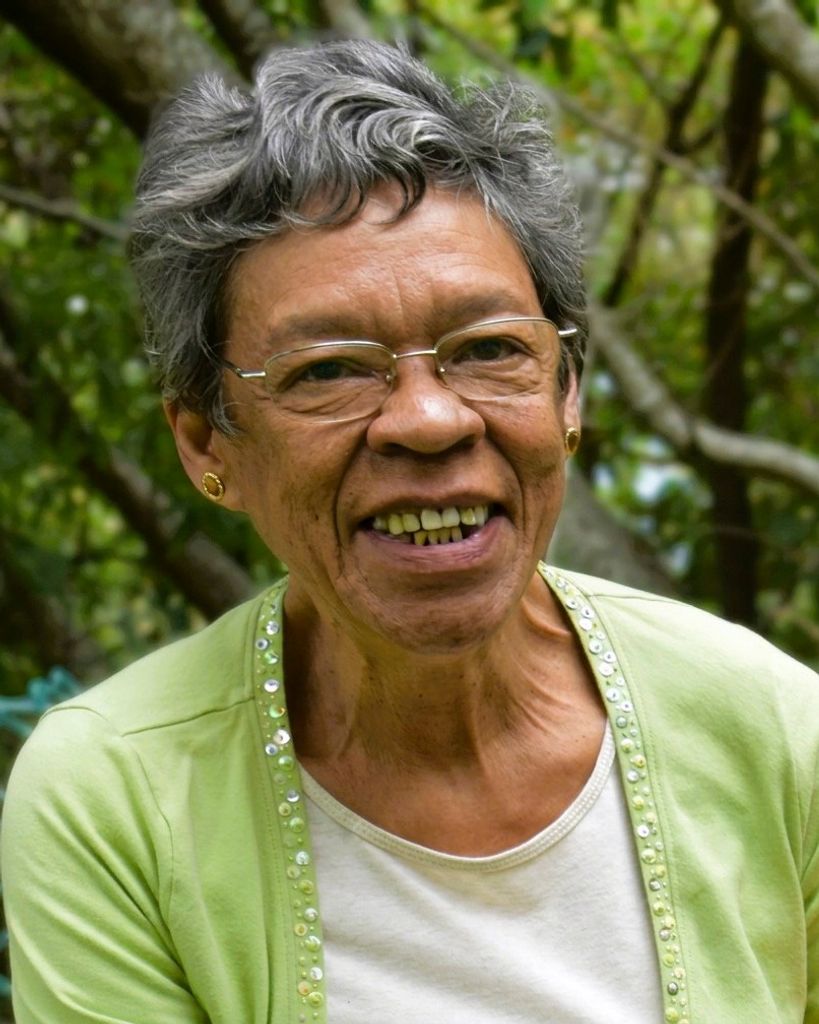
Cairncross
Sep 28, 1947 — Oct 6, 2026
Toronto, Ontario
Funeral Services for Rosalind Theresa Cairncross
Visitation

Friday
Forest Lawn Mausoleum
1:30 - 3:00 pm (Eastern time)
Rosalind Theresa Cairncross' Obituary
The Dance of Life of Rosalind Theresa Cairncross
28 September 1947 – 06 October 2026
Rosalind was a woman of many parts, many interests and skills, and many passions, including engineering, environmental science, education, women in science and the environment. She was also a superb cook, a dancer a gardener, a skilled woodworker, and the mother of a son. She was a pianist, and she could also do the most intricate knitting and crocheting.
Rosalind began her life’s journey in Uitenhage, a small industrial town in the Eastern Cape, South Africa. After attending the local school for a few years, our parents decided she (and I) should go to St Mark's Primary in Port Elizabeth. This meant, at the tender age of about 11 years, and with me in tow, she had to take a long walk from home to the railway station to take the 07:10 coal train to North End, Port Elizabeth – a 50-minute journey. In winter, it was still dark at 06:15 when we started the walk to the station. This was done unaccompanied by an adult.
A thirst for education later took the family to Cape Town. She attended Trafalgar High in Cape Town during a politically turbulent time in the early 1960s.
She attended UCT, graduating with a degree in Chemical Engineering, which was then a rare choice for a woman. It was rarer still for a woman classified as “non-white” under the Apartheid regime of the day.
In the Chemical Engineering Department’s Centennial publication in 2020, she described her experience:
“Many of the memories of my time in the Chemical Engineering Department have faded. But a few remain: the tense atmosphere in the country, the frosty reception from the faculty and, on a better note, taking some flying lessons with the UCT Flying Club. The late 1960s was a fraught time. I was the rare, maybe the first “coloured” female student in the mostly white male engineering faculty… I found myself in a sea of mostly white men and a few white women. Neither group was inclined to so much as greet me.
Added to my struggles was the constant need to earn some money. I spent most of my second year working in the R&D laboratory at a chemical coatings plant in Kuilsriver, a long commute from home and from campus.
My best memory of UCT came after graduation. I heard that the University Flying Club offered flying lessons and as a graduate I could apply. In the cockpit of the little Cessna, the instructor and I were suspended between the sea and the sky. The cost of the lessons soon proved more than my budget could stand. I didn’t get my pilot’s license, but the experience was both frightening and exhilarating. Thank you Uniform Charlie Tango.
After graduation, I landed a job in the chemical coatings industry, helped by my earlier experience. I recall no help from anyone in the Department in my job search.”
In 1978, two years after the Soweto Uprising in June 1976, having left a quiet mark in the struggle against Apartheid, and with South Africa in turmoil, Rosalind emigrated to Canada, joining her family there – our parents Kenneth and Mary and two younger siblings, Larissa and Marcius.
Her engineering background and a Master’s degree in Environmental Studies (from York University) in Canada led to a rewarding global career.
Rosalind flourished in Canada. She undertook the process of obtaining her Professional Engineer registration and that of a Consultant Engineer. She was a consultant to development projects in Kenya (for CIDA), South Africa (Peninsula Technikon), Cuba (preparation of a strategic plan for an environmental organisation), and several projects in Ontario, Canada. At various times she served on committees. She worked for the Ontario Ministry of the Environment as a Scientist/Investigator for 8 years. Her work included Environmental Law, Investigation and Enforcement, conducting research and analysis of water contaminants, and leading a team to establish a major province-wide contaminant monitoring program. She also managed a small scientific instrumentation business and worked in the chemical industry.
For a period of about 20 years, from 1988 to 2007, Rosalind was one of the most regular and prolific contributors, as a Contributing Editor, to the Canadian Consulting Engineer. Her articles emphasized the human aspects of engineering, often on environmental or historic themes. She covered an astonishingly diverse range of topics, from the elegance and endurance of Roman engineering in Bath, England, to the problems of environmental legislation in Canada and the human cost of the building of the Panama Canal. Her articles were invariably carefully and innovatively conceptualised, thoroughly researched – in several cases through on-site visits – and accompanied by her superb photographs.
The enduring impetus and philosophy of her work were the contribution of engineering to society, the environmental and human costs of engineering, and the role of women:
“… women bring an interconnectedness to scientific questions that helps to stitch together ideas across disciplinary boundaries, leading to a more holistic approach.”
She then turned to teaching.
“Close to retirement, I found myself back in an engineering faculty teaching at the University of Toronto. Being a woman in the engineering field, especially a woman of colour, has never been easy. I encouraged young people, especially girls, to study science, serving on the Board of the Ontario Science Centre, advocating for women and girls as president of Women in Science and Engineering and on other bodies.”
Rosalind taught Language Training for Project Management, English for Engineers (to Chinese professionals), and Business English to non-English speakers. For these diverse groups of students, she critically studied the methodology and style appropriate to each group, and developed or enhanced the curricula and teaching methodology as she saw fit. A teaching innovation was taking students on organized tours, placing them in authentic real-world settings outside the classroom and thus encouraging strong learner participation.
After some years of practice, she penned a 600-word essay on her Teaching Philosophy:
“I view teaching and learning as a fascinating encounter between two or more people, a temporary partnership for the purpose of imparting information, developing a skill, building an approach to exploration on the part of the teacher, and an exercise in discovery and confidence-building for the learner…..”
Rosalind loved to dance. Ballet in her youth, and Spanish Flamenco in her latter years. She danced with passion, verve and flair. On our mother’s 80th birthday, her gift was to don her blue costume and to dance! She accorded me the same honour on my 60th birthday.
Rosalind loved to work with her hands. She cooked and baked seemingly effortlessly, as those of us who enjoyed her superb pickled fish, lamb curry, or koeksisters can attest. She also completed a carpentry course and made an exquisite coffee table with an inlaid chessboard. Her skills extended to knitting, crocheting, and gardening.
After her beloved son Jason’s passing in May 2025, Rosalind’s already-compromised health deteriorated rapidly. She stoically tried to conceal her ill-health and pain, but passed away on the 6th of October, three weeks after admission to hospital.
Rosalind is survived by her siblings, Eugene, Larissa, and Marcius, and an extended family in Canada, South Africa, Namibia, and beyond.
Rosalind Theresa Cairncross' Guestbook
Visits: 3
This site is protected by reCAPTCHA and the
Google Privacy Policy and Terms of Service apply.
Service map data © OpenStreetMap contributors
This obituary is protected against unauthorized reproduction or redistribution without the funeral home's or family's consent.